Dal Baati Churma Recipe – Rajasthan's Classic Three-Course Thali
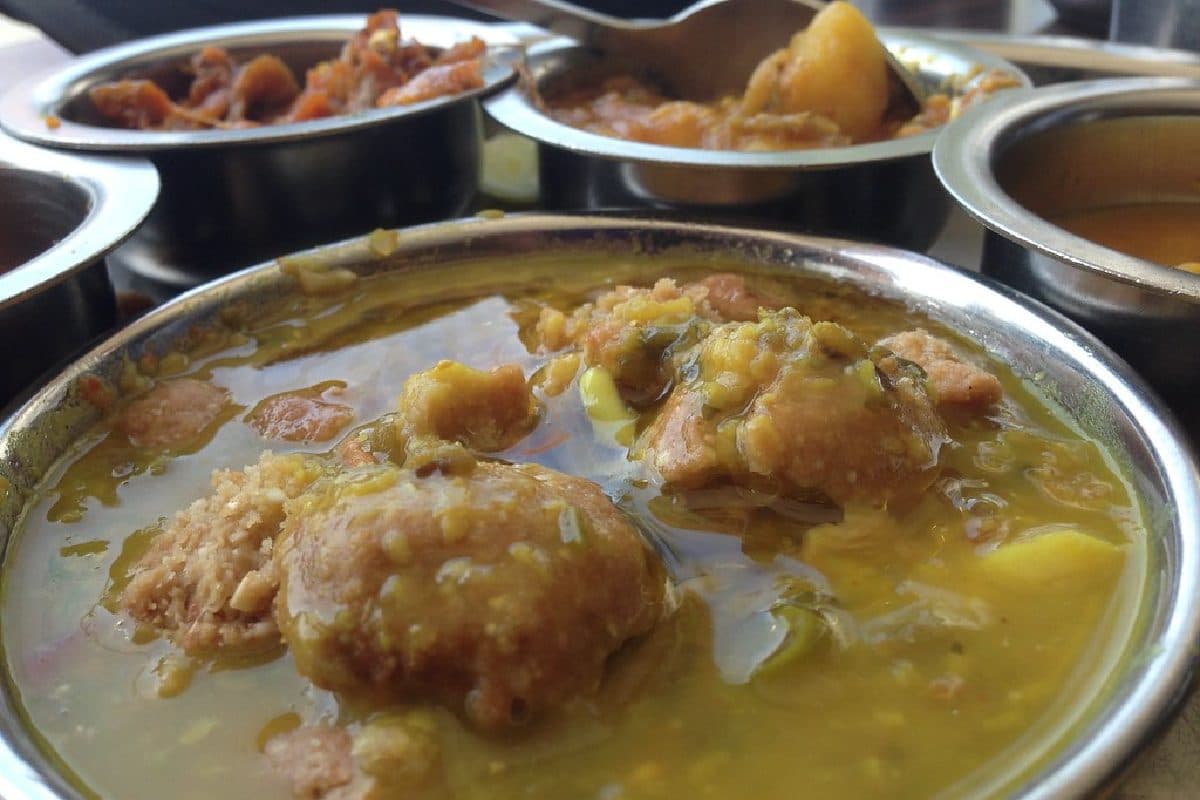
Dal baati churma is Rajasthan's most famous meal in one plate: hard, baked wheat-flour balls (baati) cracked open and dunked in ghee, a rich five-lentil dal (panchmel dal) spooned over the top, and a sweet, coarse churma on the side made from the same dough, ground with jaggery and ghee. It's a dish built for the desert — the baati keeps for days without spoiling, the dal brings the protein, and the churma is dessert and energy food in one. This version bakes the baati in a regular oven, so you don't need a wood fire or sand pit to get the proper crackly crust.
In most Rajasthani homes, dal baati churma isn't three separate dishes — it's one meal, always served together, usually with a generous ladle of ghee on the side so everyone can pour on as much as they like.
What makes a good baati
The dough is deliberately stiff and under-kneaded compared to roti dough — that's what gives baked baati its dense, slightly flaky crumb instead of turning into bread. Traditionally they're baked over hot coals or buried in sand, but a hot oven with a final ghee-dunk does the job well at home. The real test is the crack: a good baati should crack cleanly when you press it, with a pale, slightly dry interior that's thirsty for ghee.
Panchmel dal
"Panchmel" means five mixed — this dal traditionally uses five different lentils and beans (moong, urad, chana dal, toor dal and a few soaked moth beans or rajma) for a texture no single lentil gives on its own. If you're missing one, don't worry — even three or four will still taste right.
Churma, the dessert that isn't separate
Churma is made by coarsely grinding leftover baati (or a few deep-fried ones made just for this) with ghee, powdered sugar or jaggery, and cardamom. It's eaten as part of the same meal, not after it — a spoonful alongside the dal and baati on the same plate.
Serving
Serve hot, with extra ghee on the side, sliced onions, green chillies, and a wedge of lime. Leftover baati keeps for 2-3 days at room temperature and can be re-crisped in a low oven.
Common mistakes to avoid
- Kneading the baati dough soft like roti dough — it stays dense and never gets that crackly, flaky texture when baked. Keep it stiff and just combined.
- Not dunking the baati in ghee while still hot — once it cools, the crust seals and the ghee can't soak in through the cracks. Dunk it immediately, straight from the oven.
- Rushing the panchmel dal's simmer after pressure-cooking — it needs extra time on the stove with the tempering to properly meld and thicken. A quick 5-minute mix tastes separate, not combined.
Storage and reheating
Baati keeps 2-3 days at room temperature — it was designed to travel and keep in the desert climate — and freezes well; re-crisp in a low oven before serving. Dal keeps 3-4 days refrigerated and freezes well. Churma is best fresh but keeps 2-3 days in an airtight container at room temperature.
Frequently asked questions
Can I make baati the traditional way, without an oven?
Yes — traditionally they're baked directly in hot coals or buried in heated sand. A home oven at high heat is the practical modern substitute that still gets a good crust.
Is churma always made with the same dough as baati?
Traditionally yes — leftover baati, or a few extra ones fried just for this, are ground up with ghee and jaggery or sugar. Some modern versions use a simpler, separate wheat-semolina mix.
Can I make this meal vegan?
Mostly — swap ghee for a neutral oil or vegan butter throughout. The flavour will be noticeably different since ghee is central to both the baati and churma, but it's workable.
Watch how it's made
Watch the full method step by step in the video below.
Method
- Make the dough. Mix the flour, semolina, ajwain, baking soda and salt. Rub in the ghee, then add water gradually to form a stiff dough — firmer than roti dough. Rest for 15 minutes.
- Shape and bake. Divide into 8 portions, roll into balls, and press a thumb indent in the centre of each. Arrange on a tray and bake at 180°C (350°F) for 35-40 minutes, turning once, until pale golden and firm — they should sound hollow when tapped.
- Dunk in ghee. While still hot, dunk each baati briefly in warm melted ghee so it soaks in through the cracks. Set aside a few plain ones for the churma.
- Soak and pressure-cook the lentils. Rinse all the lentils and beans together and soak for 30 minutes. Pressure-cook with 4 cups water, turmeric and salt for 4-5 whistles until soft.
- Make the tadka. Heat ghee in a pan, add cumin seeds, hing and the dried red chilli. Once the cumin sizzles, add ginger-garlic paste and onion, and cook until golden. Add tomatoes and cook until soft and the oil separates.
- Combine and simmer. Stir in chilli powder, coriander powder and the cooked dal with its liquid. Simmer for 10-15 minutes, mashing lightly so the lentils meld together. Finish with garam masala and fresh coriander.
- Grind and sweeten. Break the reserved plain baati into rough pieces and pulse in a food processor, or crush with a rolling pin, into coarse crumbs. Mix in the melted ghee, powdered sugar or jaggery, and cardamom powder until it clumps slightly. Scatter over the chopped nuts.
- Assemble and serve. Serve each portion with two baati drizzled in extra warm ghee, a generous ladle of dal, and a small mound of churma on the side, along with sliced onions, green chillies and lime.
More like this
 RajasthaniGhevar Recipe – Traditional Rajasthani Sweet
 RajasthaniBesan Ka Shurua Recipe – Traditional, Comforting & Easy Gram Flour Soup
 RajasthaniDaal Baati Churma Recipe – Authentic Rajasthani Traditional Thali
 RajasthaniAuthentic Rajasthani Dal Baati Churma Recipe – A Traditional Indian Delight
 RajasthaniRajasthani Kadhi Kachori Recipe
Ratings & reviews
Sign in to rate or review this recipe.
- No reviews yet. Be the first to review!
Comments
Sign in to leave a comment.