Nihari Recipe (Slow-Cooked Mughlai Mutton Stew)
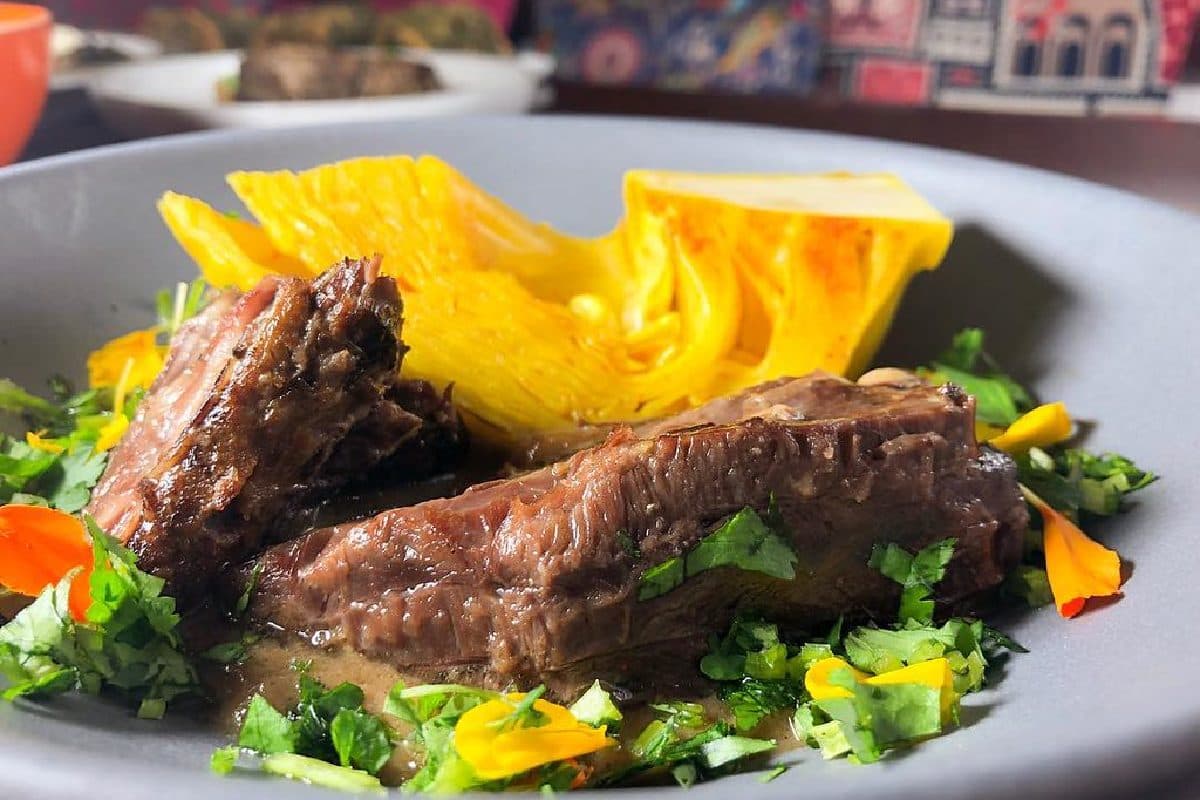
Bone-in meat simmered for hours until it falls apart, thickened to a deep, glossy gravy with a wheat flour slurry — Old Delhi's classic slow-cooked Mughlai stew.
Nihari began as a slow-simmered breakfast dish for Mughal nobility — meat on the bone, cooked overnight on dying embers until it was falling apart by morning. Old Delhi still treats it as a breakfast dish, though most home cooks make it for a weekend lunch instead, using a pressure cooker to get the same tenderness in a fraction of the time.
The flour is what thickens it properly
Nihari's distinctive thick, glossy gravy doesn't come from reduction — it comes from a wheat flour (atta) slurry stirred in near the end, which is also what gives it that characteristic deep brown colour and body.
Serving
Serve hot with naan or khameeri roti, topped with julienned ginger, green chillies, a scatter of fried onions, and a squeeze of lemon.
Common mistakes to avoid
- Rushing the simmer — real nihari needs 4-6+ hours of slow cooking for the meat to turn fall-apart tender and the bone marrow to enrich the gravy. A quick 1-hour version is a different dish.
- Using a generic garam masala instead of a proper nihari masala blend — the specific mix of warming whole spices is what gives nihari its distinct aroma.
- Skipping the finishing tadka and fresh garnish — nihari is traditionally topped at the table with fried garlic, ginger and chilli, not just stirred in during cooking. Skipping this loses the layered aroma.
Storage and reheating
Keeps 3-4 days refrigerated and freezes exceptionally well for up to 3 months — nihari is often cooked in large batches specifically to freeze. Reheat slowly, and add the fresh tadka and garnish only after reheating, never before freezing.
Frequently asked questions
Can I make nihari in a pressure cooker to save time?
Yes — pressure-cook for about 45-60 minutes plus natural release, instead of hours of stovetop simmering. The texture comes close, though purists say the slow method develops more depth.
What's the difference between nihari and haleem?
Nihari is a slow-cooked meat stew with a thin-to-medium gravy. Haleem includes lentils and wheat or barley pounded into the meat for a thick, porridge-like texture — different dishes, despite both being slow-cooked.
Why is bone marrow (nalli) important in nihari?
It melts into the gravy over the long simmer, adding a richness and body that boneless meat alone can't replicate — it's a defining part of traditional nihari.
Watch how it's made
Watch the full method step by step in the video below.
Method
- Fry the onions. Deep-fry the sliced onions until deep brown and crisp. Set aside half for garnish, and crush the rest.
- Sear the meat. Heat the ghee in a heavy pot and sear the meat pieces on high heat until browned on all sides.
- Build the base. Add the ginger-garlic paste and all the spices, cook for 2-3 minutes, then stir in the crushed fried onions.
- Slow-cook. Add enough water to cover the meat and the salt. Pressure-cook for about 45 minutes, or cover and simmer on low heat for 3-4 hours, until the meat is falling off the bone.
- Thicken. Mix the wheat flour with a little water into a smooth, lump-free paste. Stir this into the simmering stew and cook for 15-20 minutes until thickened and glossy.
- Finish and serve. Garnish with julienned ginger, coriander, green chillies, the reserved fried onions and a squeeze of lemon. Serve hot with naan or khameeri roti.
More like this
Ratings & reviews
Sign in to rate or review this recipe.
- No reviews yet. Be the first to review!
Comments
Sign in to leave a comment.