Tunday Kabab Recipe – Lucknow's Melt-in-the-Mouth Galouti Kebab
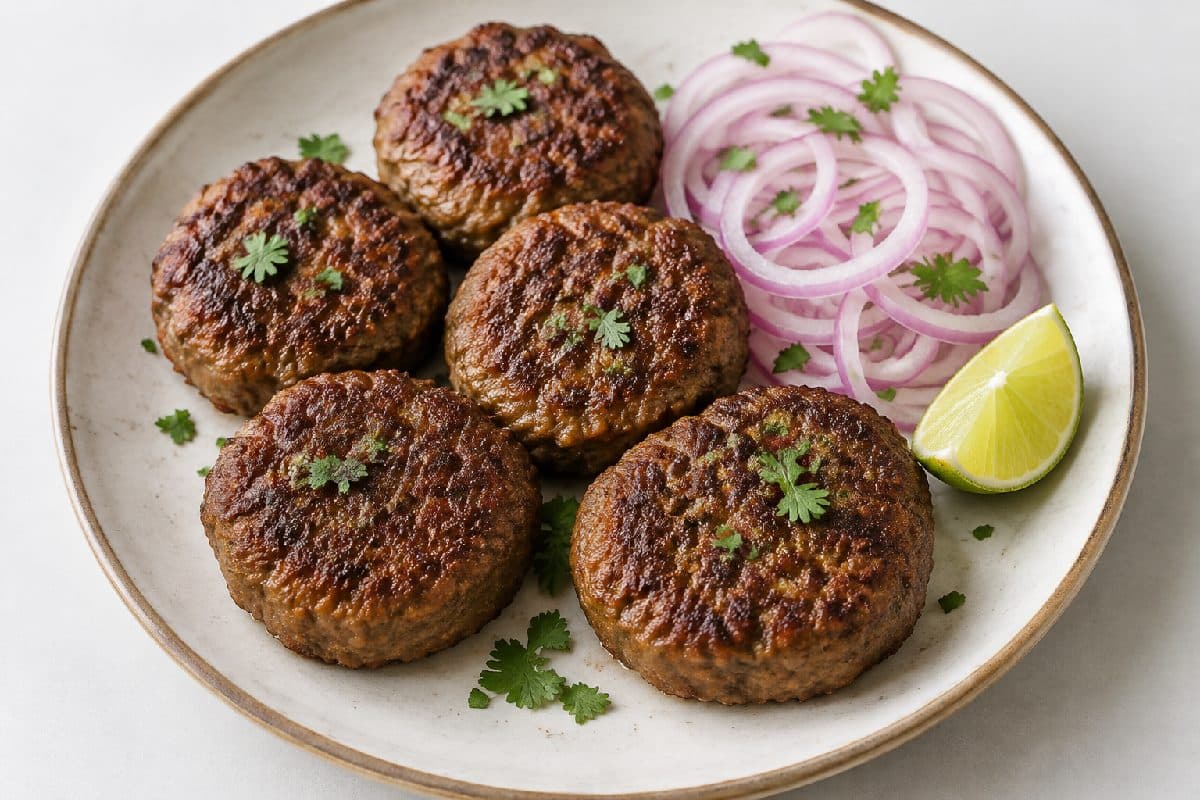
Tunday kabab, better known as galouti kebab, is Lucknow's most famous street food — minced meat kebabs pounded so fine and spiced so carefully that they're meant to dissolve on the tongue, a dish invented for a nawab who had lost his teeth.
A kebab invented for a toothless nawab
Legend has it galouti kebab was created for an ageing nawab of Awadh who could no longer chew tough meat but refused to give up kebabs — the chefs responded with a kebab so finely pounded and tenderized it required no chewing at all. "Galouti" itself means something close to "melt-in-the-mouth" or "that which dissolves."
Raw papaya is the real tenderizer
A paste of raw papaya, which contains the enzyme papain, is worked into the minced meat to break down its fibres — this, more than any single spice, is what gives the kebab its famously soft, almost pâté-like texture once cooked.
The spice blend is the craft
Traditional recipes are said to use dozens of spices, roasted and ground into a complex, fragrant masala — this version uses a practical home blend that gets close to the real depth without needing a spice cabinet the size of a shop's.
Common mistakes to avoid
- Skipping the raw papaya paste — without it the kebab stays dense and chewy rather than achieving the signature melt-in-the-mouth texture.
- Using meat that's too lean — some fat is essential for both texture and flavour; very lean mince makes a dry, crumbly kebab.
- Cooking on too high heat — galouti kebabs are shallow-fried gently; high heat chars the outside before the inside sets properly.
Storage and reheating
The spiced mince mixture (before shaping and cooking) keeps 1-2 days refrigerated. Cooked kebabs are best fresh, but leftovers keep a day refrigerated and reheat gently in a pan — they're fragile, so handle carefully.
Frequently asked questions
What meat is traditionally used for galouti kebab?
Historically buffalo or beef, since Awadhi Mughlai cuisine centred on it; mutton or lamb mince is a common and very good substitute for home cooking.
Can I substitute raw papaya if I can't find it?
A small amount of grated kiwi or a pinch of meat tenderizer powder can work in a pinch, though raw papaya gives the most authentic result and is worth seeking out.
What's traditionally served with galouti kebab?
Warqi paratha (a flaky, layered flatbread) or ulte tawe ka paratha, along with sliced onions and a wedge of lime.
Watch how it's made
Watch the full method step by step in the video below.
Method
- Tenderize the mince. Mix the mince with the raw papaya paste and a pinch of salt. Cover and refrigerate for at least 1 hour, ideally 2-3.
- Season the mixture. Add the ginger-garlic paste, roasted gram flour, chilli powder, turmeric, garam masala, cardamom, mace, fennel, saffron milk and salt. Mix thoroughly, then grind or pound the mixture until completely smooth and paste-like — a food processor works well.
- Rest again. Cover and refrigerate the smooth mixture for 30 minutes to firm up slightly, making it easier to shape.
- Shape and shallow-fry. Shape into small, flat patties with damp or oiled hands. Heat ghee in a heavy pan over medium-low heat and shallow-fry the kebabs for 2-3 minutes per side, until browned and just cooked through — they're delicate, so turn gently.
- Serve. Serve hot, immediately, with warqi paratha, sliced onions and a squeeze of lime.
More like this
Ratings & reviews
Sign in to rate or review this recipe.
- No reviews yet. Be the first to review!
Comments
Sign in to leave a comment.